Realized by
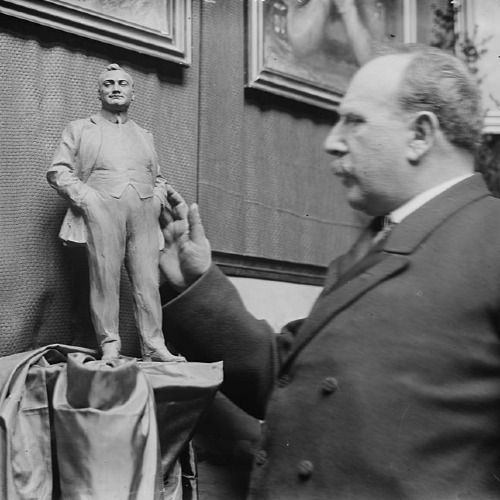
Ettore Ximenes
1855 - 1926
Monument history
INAUGURATION: 1931
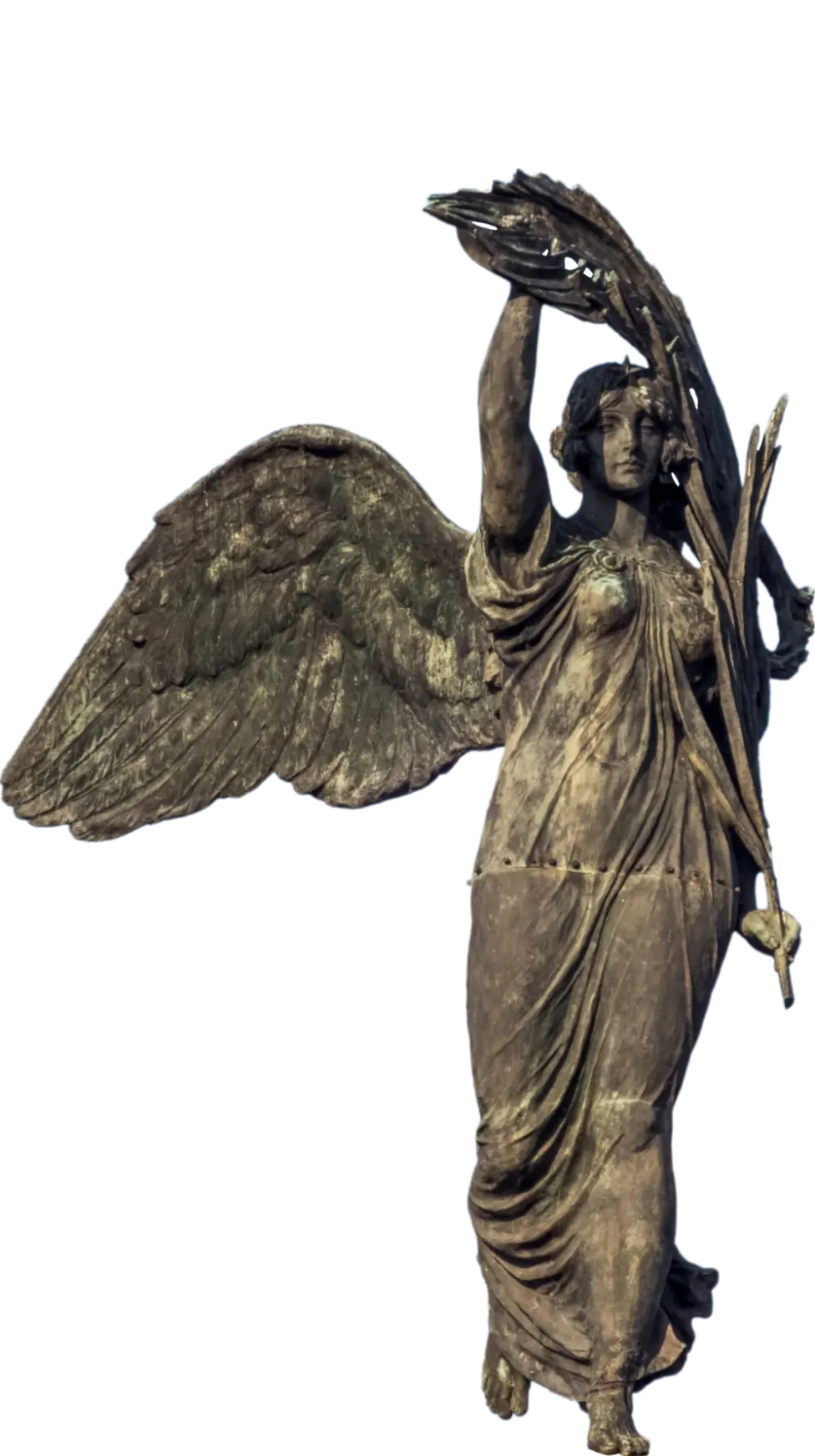
The monument depicting the Winged Victory and dedicated to the Italian victory in the First World War is located between Viale Toschi and Viale IV Novembre, near the Palazzo della Pilotta and the Parma stream. The project was designed in 1917 by the Parmese architect Lamberto Cusani, but the monument was not inaugurated until 1931, in the presence of King Victor Emmanuel III. The bronze sculpture was created by the Palermo-born sculptor Ettore Ximenes.
The monument was commissioned for two reasons and at two different times: in December 1915, the Municipality allocated 10,000 lire to build a monument in memory of the fallen soldiers. The following spring, the Infantry Application School of Parma commissioned the monument to celebrate the Italian victory, following instructions from the Ministry of War. Initially, the sculpture was intended to stand near the Ducal Palace, then along the avenue leading to the Ducal Garden; only in 1927 was its final location decided. At that time, the service buildings of the bus station had not yet been built along Viale Toschi, and the Winged Victory appeared to be literally taking flight.
In 1941, the statue escaped being melted down for wartime purposes because Mussolini, during a visit to the city, decided that it should be spared. In 1989, when the Toschi car park was built, the monument was dismantled and restored before being returned to its original location.
The sculpture was created entirely by Ximenes and cast using bronze obtained from captured enemy weapons at the Military Arsenal in Turin.
DESCRIPTION
The monument consists of an 8-metre-high base made of Grappa marble by soldiers and veterans of the Infantry Application School of Parma. Above it stands a column with a Corinthian capital, decorated with a very long bronze sword and wrapped in a vegetal frieze. At the top stands the statue of the Winged Victory.
On the south-facing side of the base is engraved the Victory Bulletin, while on the rear is the dedication "To Italy's Victory" by the officers of the Infantry School. The reinforced concrete column, clad in Verona marble, is 10 metres high, while the sculpture measures 4.50 metres. Including the base, the monument reaches an overall height of approximately 24 metres.
In Parma, Emilia-Romagna
Winged Victory
Winged Victory is the Greek goddess Nike, "she who brings victory," both in war and in peaceful competitions. She already appears as a winged goddess in Homer's works, although Hesiod was the first author to mention her. While Nike played only a secondary role in Greek mythology and religion, she became an important figure in art and poetry. She was the daughter of the Titan Pallas and the nymph Styx and had three siblings. During the war against the Titans, Nike sided with Zeus, helping him achieve victory.
ICONOGRAPHY
Representations of Nike are very common in ancient art. The winged goddess is often associated with Athena, to whom she bears a close resemblance. She is frequently depicted soaring through the air, with the flowing drapery of her garment emphasizing the movement of flight.
Winged Victory is portrayed carrying the symbols of triumph that she bestows upon the victor, such as ribbons, branches, wreaths, and, in later periods, a palm branch. She may also hold libation bowls, incense burners, or sacrificial baskets. In Greek vase painting, Nike appears with a wide variety of attributes and is sometimes depicted as the charioteer of Zeus. In mosaics and on coins, however, she is most commonly represented carrying a palm branch.
WINGED VICTORY THROUGH THE CENTURIES
The most famous ancient Greek representation of the winged goddess is the Winged Victory of Samothrace, a Hellenistic masterpiece now preserved in the Louvre Museum in Paris. The figure also became widespread in Roman art: during the age of Augustus, the cult of Victoria Augusta was established in Rome, and the goddess became one of the principal symbols of imperial power.
The ancient image of Nike, or Victory, has remained remarkably unchanged over the centuries. During the age of nationalism, between the nineteenth and twentieth centuries, Winged Victory became closely associated with military achievements and acquired a strong patriotic meaning. She also became a recurring figure in commemorative monuments throughout the world, often placed in elevated and dominant positions, such as atop a column, as in the monument in Parma.
Also discover:
Vittorio Bottego
Listen to the statue by calling
+39 0521 183 0414,
or click the button below