Realized by
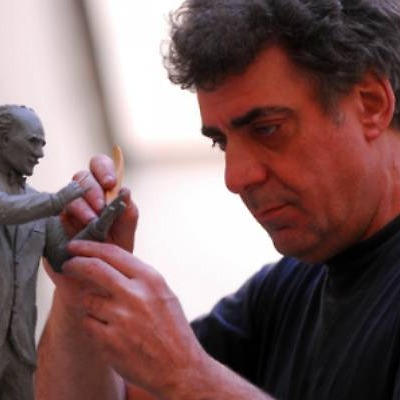
Maurizio Zaccardi
Birth: 1955
Monument history
INAUGURATION: 2004
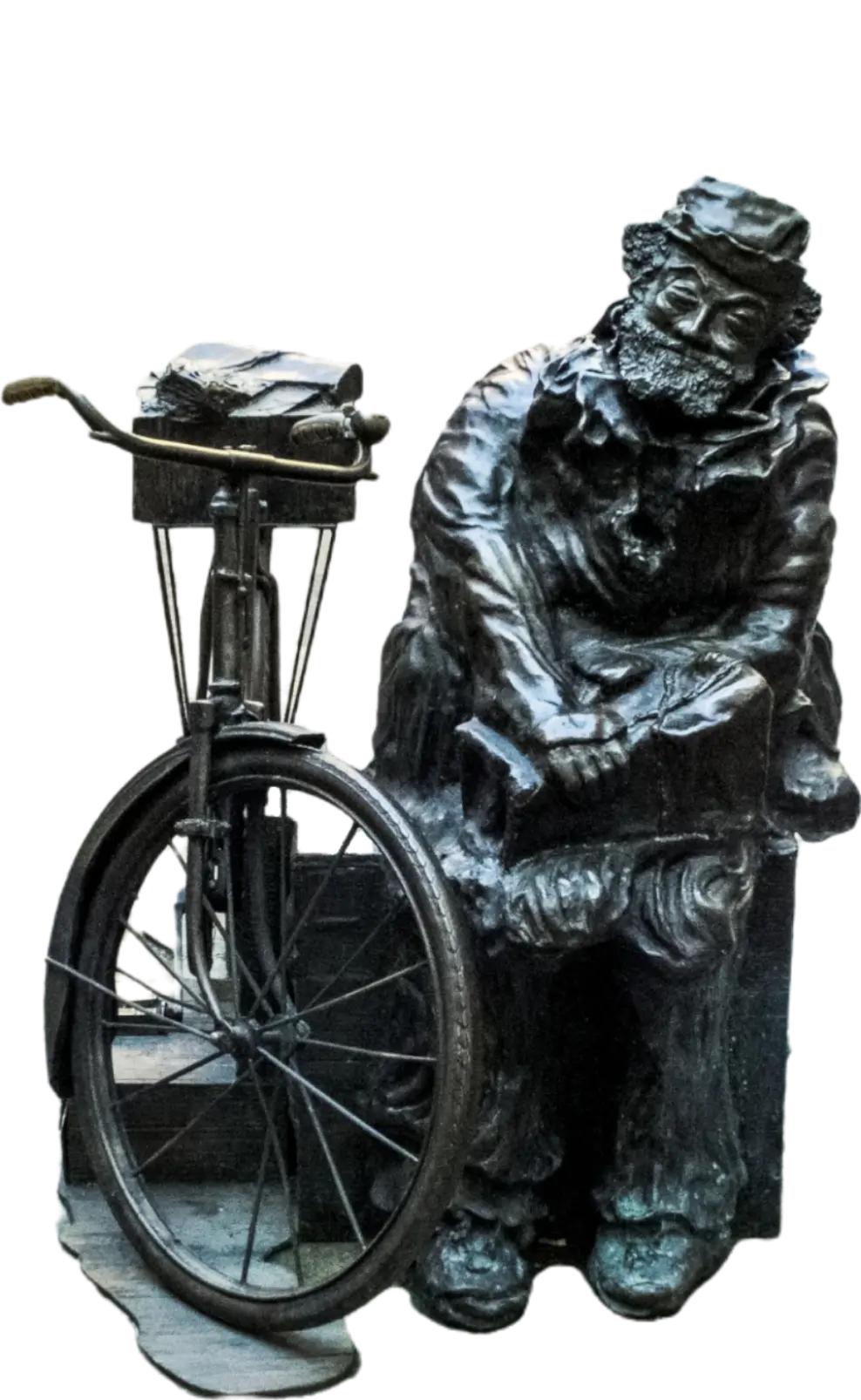
The statue of Enzo Sicuri, known as "Al Mat Sicuri", was inaugurated in the center of Piazzale della Macina in Parma on Saturday, October 30, 2004, by a citizens' committee in agreement with the Municipality. The aim was to commemorate a true Parmese "del sasso" and to pay a heartfelt tribute to the city's last street philosopher, in one of the small squares where he spent his days and nights. The statue depicts the homeless Enzo Sicuri sitting on a cardboard box beside his bicycle, on whose luggage rack he carried the cardboard and newspapers he used as clothing and to build a shelter for sleeping in the streets of Parma. The monument bears the inscription: "In life, you can do without everything except the air you breathe," a phrase with which he himself identified.
Shortly after the inauguration, a municipal commission considered moving the statue from Piazzale della Macina to the Villetta Cemetery, where Sicuri is buried. However, the reaction of the people of Parma prevented the relocation, and it was considered more appropriate to leave the statue in the streets that Sicuri loved to frequent, where visitors and passers-by could more easily see and remember this unique figure.
The work is made of bronze.
In Parma, Emilia-Romagna
Enzo Sicuri
1907 - 1988
Enzo Sicuri, known to everyone as Al Mat Sicuri, was a true "Parmigiano del sasso" (a Parmesan whose family had lived in the city for generations). Born in Parma on 30 October 1907, he was the son of a grain broker and an ironing woman.
Throughout his life he worked in a variety of jobs, from bricklayer to perfumer. At the age of eighteen he was called up for military service, during which he began to show his intolerance for rules and authority.
After completing the equivalent of seventh grade through evening classes, he abandoned formal education. Once he returned from military service, he chose to begin a new life, "without the imposition of the State," sleeping under the stars and dressing himself with plastic sacks and copies of the Gazzetta di Parma newspaper.
He could not stand wearing shoes and wore a cap made of folded newspapers. During the Fascist period he was arrested because homeless people were not tolerated and was wrongly accused of being a thief.
Enzo loved studying and dreamed of becoming a naval engineer, but lacking the financial means, he devoted himself to books instead. He read extensively and possessed remarkable knowledge. Al Mat Sicuri was anything but mad, which is why those who knew him called him the "sidewalk philosopher." His intellectual mentor was Dante Spaggiari, a printer from Parma. Sicuri often said that Spaggiari had helped him mature, introduced him to anarchist thought, and encouraged him to develop his own independent identity.
Although his appearance could seem intimidating and his character was often gruff, behind his blunt replies and colorful language he was a harmless man. Many people in Parma were fond of him, from pastry chefs, fishmongers, greengrocers, and restaurateurs to members of the city's noble and upper-class families, who gladly invited him to dine with them on special occasions.
Among his closest friends were writers, painters, journalists, and artists, who admired his wit, originality, consistency, and the profound reflections on life hidden behind his remarks.
The only people with whom he had an ongoing feud were the municipal police and the street cleaners, because they regularly threw away the cardboard boxes he carefully stored in different corners of the city. They often took advantage of his absence—when he visited Pepèn's sandwich shop or the pastry chef Pagani in the hope of receiving something to eat—to clear away his belongings.
Many local people kept food aside for him, which he carefully stored in the many tins hidden throughout the city. In return for a meal, some would ask him to sing, as he had a beautiful voice and knew the arias of many operas. Music was one of his greatest passions, inherited from his father. He loved opera so much that the only time he agreed to dress elegantly was to attend a performance at the Teatro Regio.
In 1982 he suffered a stroke and was forced to abandon his wandering lifestyle. He was admitted to the Stuard Hospital in Parma, where he died on 15 March 1988.
On the thirtieth anniversary of his death, the city remembered him with great affection. Guided walks were organized through the neighborhoods where he had lived, exhibitions displayed the many photographs taken of him, the decision to keep his statue in its current location was reaffirmed, and it was announced that one of Parma's new homeless shelters would be named in his honor. Even so, Sicuri had always preferred sleeping beneath the stars, convinced that in life one could do without everything except the air needed to breathe.
Also discover:
Padre Lino
Listen to the statue by calling
+39 0521 183 0422,
or click the button below