Davide Calandra
1856 - 1915
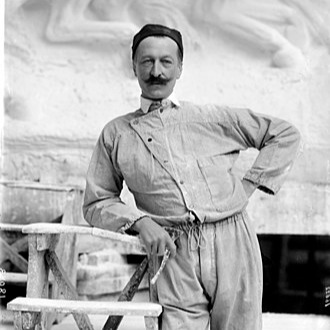
Davide Calandra was born in Turin on October 21, 1856, into a wealthy family with a strong passion for culture. His father was both a lawyer and an engineer with a keen interest in archaeology.
He studied at the Albertina Academy of Fine Arts in Turin and enlisted in the Savoia Cavalleria regiment in 1875. He later worked alongside his father and brother as an archaeologist while gradually establishing himself as a successful sculptor.
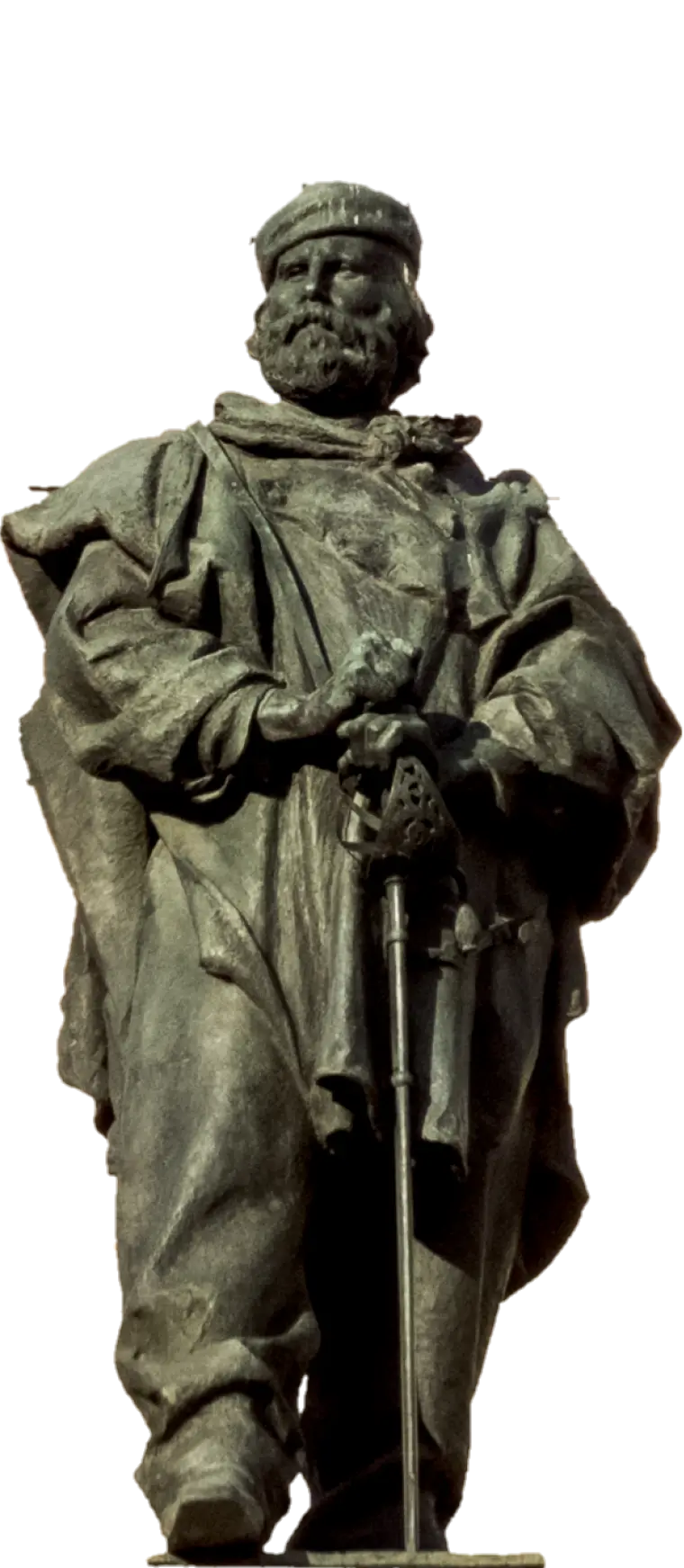
In 1880, he made his public exhibition debut in Turin with the plaster model Penelope's Vigils, which was warmly received by critics. His career quickly flourished: in 1885 he won the competitions to design the Monument to Foscolo in Florence and the Monument to Garibaldi in Milan, and in 1889 he was commissioned to create the Monument to Garibaldi in Parma.
His reputation continued to grow through the creation of major public monuments that helped celebrate Italy's national identity, including the Monument to Prince Amedeo of Aosta in Turin (1902) and the Monument to Zanardelli in Brescia (1906).
In 1908, Calandra was commissioned to create the bronze relief The Apotheosis of the House of Savoy for the new parliamentary chamber in Palazzo Montecitorio in Rome. This elaborate allegorical work celebrated the glory of the Italian royal family. His artistic output also includes the designs for the Italian one- and two-lira coins minted between 1908 and 1916, as well as the five-lira coin issued in 1914.
Davide Calandra died in Turin on September 8, 1915.
Today, the Davide Calandra Gipsoteca is located in the town of Savigliano, in the province of Cuneo, a place to which the sculptor was deeply attached. Housed within the Civic Museum, it preserves many of his original plaster models created in preparation for his major works. The collection began with a donation made by Calandra himself between 1914 and 1917, was later expanded by his daughter Elena, who inaugurated the museum in 1973, and grew further through donations from his heirs.